
What Fallow Fields Know That We've Forgotten
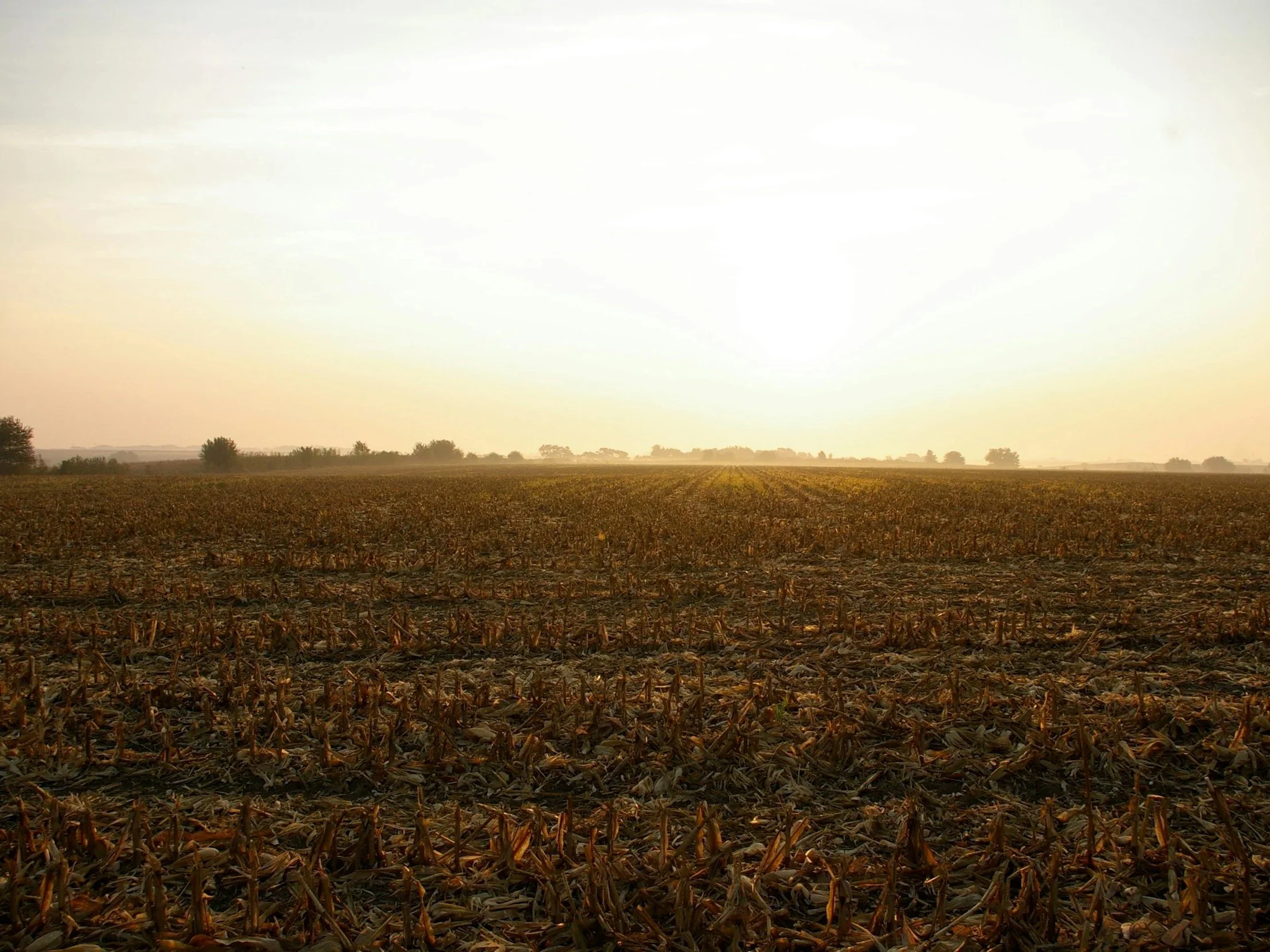
Image by @cstembridge from Unsplash
When was the last time you paused before a meal?
Not to take a photograph of it, though there is no shame in that. But to genuinely pause. To look at what is on your plate and wonder, even briefly, what it took to get there.
The tomato that found its way into your pasta sauce did not simply appear. It was planted in soil that had been prepared, turned, and often rested before a single seed was pressed into it. It was tended through uncertain weather. Harvested at the right moment, not too early, not too late. Transported, sorted, and stored with care before it ever reached you.
And the farmer who grew it? They did not wake up one morning and guess. Behind every fruit, every grain, every vegetable on your plate is a quiet accumulation of wisdom: about seasons, about soil, about timing, about when to work the land and, crucially, when to leave it alone.
We rarely think about any of this. We eat, and we move on.
But the food on your plate has been through something. And the wisdom that put it there has something to teach us, if we are willing to stay at the table a little longer.
There is a farming practice so ancient it appears in the earliest agricultural records. A field is planted, harvested, and then, deliberately, intentionally, left alone. No seeds. No crop. No visible output for an entire season, sometimes more.
It is called lying fallow.
To the untrained eye, it looks like nothing. Wasted land. A missed opportunity. A farmer doing less when they could be doing more.
But the soil knows something we have forgotten.
When a field lies fallow, it is not idle. Beneath the surface, nutrients are being replenished. Moisture is being retained. The microscopic ecosystem, the bacteria, the fungi, the earthworms, quietly rebalances. Pest cycles that depend on a continuous crop are broken. What looks like absence is, in fact, recovery. What looks like doing nothing is the field doing exactly what it needs to do in order to produce again.
Fallow is not failure. Fallow is preparation.
The Cost of Never Stopping
Push soil too hard, season after season without rest, and it loses the very nutrients that allow roots to hold. Crops thin out. Yields drop. Eventually, the land that once produced abundantly begins to resist. Not out of stubbornness, but exhaustion.
Think too of a building under construction. Before the walls go up, before anything is visible above ground, the foundation must be laid, left to set, and tested. You cannot rush concrete. You cannot skip the curing process because you are eager to see the building rise. The invisible work is what holds everything else up. Skip it, and the structure above ground will eventually betray the shortcut taken below.
We are not so different.
There is a certain kind of person, and I have been her, who keeps going long after the signals say stop. The tiredness becomes background noise. The restlessness is explained away as just a busy season. The flatness, that grey, going-through-the-motions feeling, is called being an adult. We normalise it. We even wear it like a badge.
But what if the flatness is the field telling you it needs to lie fallow?
Two Ways We Get Rest Wrong
In the world most of us live and work in, rest tends to be framed in one of two ways.
The first is rest as luxury. A long holiday. A spa weekend. Something you earn, and only then, if you can afford it. Rest, in this frame, belongs to the privileged few. For everyone else, it is aspirational at best and self-indulgent at worst.
The second is rest as laziness. The unflattering twin. The moment you slow down, the quiet fear creeps in: Am I falling behind? Am I less committed than I should be? Will someone notice that I stopped?
Both framings miss the point entirely.
Rest is not a reward. It is not a personality flaw. It is a biological and psychological necessity, as essential to growth as effort itself. A fallow field is not a lazy field. It is a wise one.
Why Are We Punishing Ourselves?
I want to sit with that question for a moment, because I think it deserves more than a passing thought.
Somewhere along the way, we internalised the idea that our worth is tied to our output. That producing, achieving, and being visibly busy is the same as being valuable. So we push. We fill the calendar. We say yes when we mean not yet. And we feel vaguely guilty every time we pause.
But the field does not feel guilty for being fallow. The field simply rests. And in resting, it becomes capable of something it could not have produced otherwise.
There is a line from my book, If Humans Were Spaghetti, that I keep returning to: too much heat for too long does not refine us. It undoes us. The spaghetti burns. The shape is lost. What was meant to become something nourishing turns into something that cannot be salvaged. The book explores what happens when we stay in the heat too long. This article is about what comes next: the fallow. What that stepping-out season actually looks and feels like, and why it is not the end of the process but an essential part of it.
Rest is not the opposite of growth. Rest is part of the process.
What Nature Has Always Known
The fallow field is not the only lesson nature offers freely, if we are willing to look.
Trees shed their leaves in autumn, not because they are dying, but because they are conserving energy for what is coming. The bare branches of winter are not emptiness; they are rest before renewal.
Bears hibernate. Not because they have given up on finding food, but because their bodies know that the most productive thing they can do in that season is stop and restore.
Even the moon waxes and wanes. The tides go out before they come back in.
Nature does not apologise for its rhythms. It does not hustle through winter. It does not treat dormancy as a character flaw. It simply obeys the season.
We are part of that same natural order. We just keep forgetting.
What Fallow Seasons Actually Look Like
A fallow season does not have to be a sabbatical or a career break. It rarely is.
Sometimes it is a quieter week, on purpose. A Saturday with nothing scheduled. A morning where you sit with your coffee before opening your phone. A weekend where you let the to-do list wait.
Sometimes it is a creative pause: stepping back from a project not because you have abandoned it, but because the field needs to breathe before the next harvest.
And sometimes, it is the harder kind: a season where circumstances slow you down whether you chose it or not. Illness. Grief. Transition. The world going still around you in a way that feels disorienting because you no longer have busyness to hide behind.
Those seasons are often the most quietly productive of all.
The Discomfort of Stillness
I will be honest: stillness is uncomfortable at first.
When I finally gave myself permission to slow down, the initial feeling was not peace. It was anxiety. The noise of the undone. The pull of the productive. The strange guilt of resting when there was still so much to do.
But the field does not rush its fallow. And neither, eventually, could I.
In If Humans Were Spaghetti, I write about the wisdom of knowing when to step out of the heat. Not as defeat, but as discernment. The heat is temporary. Knowing when to leave it is part of the work. But what comes after the stepping out — the quiet, the integration, the slow replenishment — that is the fallow. That is where the soil of the next season is being prepared.
If you are in a fallow season right now, you are not wasting time. You are building capacity.
Stay at the Table a Little Longer
The Mona Lisa, as the name of this column reminds us, rewards you for staying longer than you planned. She does not rush. She does not explain herself. She simply holds something quiet and waits for you to notice.
Fallow fields are much the same. And so, perhaps, is that plate of food you almost did not look at.
The farmer who grew what you ate today understood something deeply: that the land needs to rest before it can give again. That the most productive thing you can do in certain seasons is nothing visible at all. That wisdom, real wisdom, knows when to plant and when to simply leave the field alone.
So before you fill the next gap in your calendar, before you say yes to the next thing out of habit or guilt, pause. Ask yourself:
Is this a season to plant? Or a season to rest?
Both are necessary. Both are productive. And only one of them is being vastly undervalued right now.
The soil knows. The farmer knows. Maybe it is time we listened too.
