
Two People Stood Before the Same Window
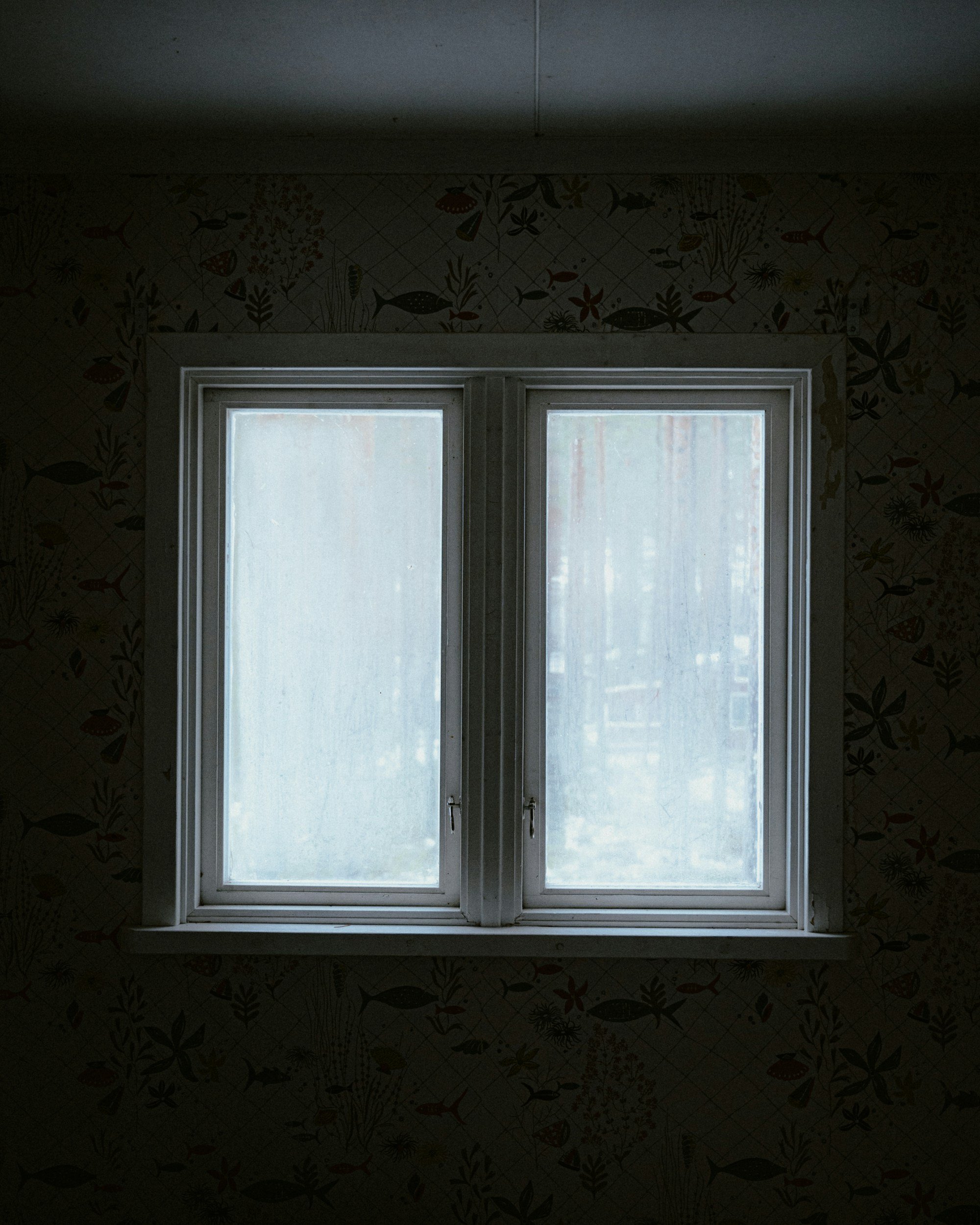
Image by @luca_severin from Unsplash
One saw mud. One saw stars. On how we choose what we look at.
Have you ever noticed that two people can look at the same thing and walk away with two entirely different answers for what they saw? I have. Remember the hype over the dress — was it blue and black, or white and gold? A colleague of mine argued with me about it. She didn't believe I was seeing blue and black while she was seeing white and gold. I later understand the science behind it — something to do with how each of our eyes had already made assumptions about the light in the photo before we'd even opened them. And yet, to this day, she still chooses to believe what she saw was the only correct answer.
The dress was never really a disagreement. It was two nervous systems doing the same automatic maths on the same ambiguous light, and neither of us could have chosen to see it differently even if we'd tried. That kind of seeing is hardwired — off-limits to willpower, no matter how convinced either of us was.
Perspective is a different kind of window. Nobody's eyes force them toward the mud or the stars. Attention gets there first — and attention, unlike colour vision, can be trained.
What shapes that attention is harder to pin down than a lighting condition. What's happening in our lives, how we were raised, what we know and don't know, what we're currently carrying — all of it decides what a window shows us first. Two people can stand at the same one. One sees mud. One sees stars. Neither is lying about what's in front of them.
But here's the assumption worth challenging: that mud means something has gone wrong, and stars mean everything is fine. It's tempting to sort people that way — the mud-seer as the one who needs fixing, the star-seer as the one who's already got it figured out. I don't think that sorting holds up.
Seeing mud isn't automatically negativity. Sometimes it's just where someone is standing right now, and standing there isn't a failure. Seeing stars isn't automatically hope, either — sometimes it's someone refusing to look down at something they'd rather not deal with. The content of what a person sees tells you less than whether they're still able to see the other thing when it matters. Someone who sees mud but can still look up when they need to — that's groundedness. Someone who sees mud and cannot stop seeing it — that's worth paying attention to. Someone who sees stars and can still name the mud when it's there — that's real hope. Someone who sees stars and refuses the mud entirely — that's avoidance wearing a brighter colour.
So how do you walk alongside someone standing at either window?
With the mud-seer, resist the urge to point upward. Telling someone "it's not all bad" while they're mid-mud tells them their read of the moment is wrong, and people rarely open up to being corrected. What tends to work is going down into the mud with them first — naming what's actually hard, without rushing to talk them out of it. Only once someone feels accompanied, rather than corrected, does their attention loosen enough to notice anything else on its own.
With the star-seer, the temptation runs the other way — to leave them be, because nobody wants to be the one who dims someone's mood. But if the star-gazing has become a way of stepping around something, cheering it on is just a gentler kind of avoidance. The move here isn't to darken the mood. It's to ask, warmly, whether there's something they might not be looking at. Not to puncture the hope — just to check whether the hope has room in it for the whole picture.
In both cases, you're not trying to change what someone sees. You're gently checking whether they still can see the other thing — because that, not the view itself, is what tells you whether someone's alright.
I'm writing this while sitting with a decision of my own that has no pretty option. The kind where every path forward carries a real cost, and no amount of hoping makes that cost disappear. If I only looked for the stars in it, I'd be lying to myself about what's actually being asked of me. If I only looked at the mud, I'd talk myself out of moving at all. What I've had to hold instead is both at once — clear-eyed about what's hard, still reaching for what's possible on the other side of it. I don't have a resolved ending to offer yet. I'm not sure that's the point.
The window doesn't choose what to show you. But over enough mornings, you can choose what you go looking for.
What is your window showing you?
