
The Map is Not the Territory
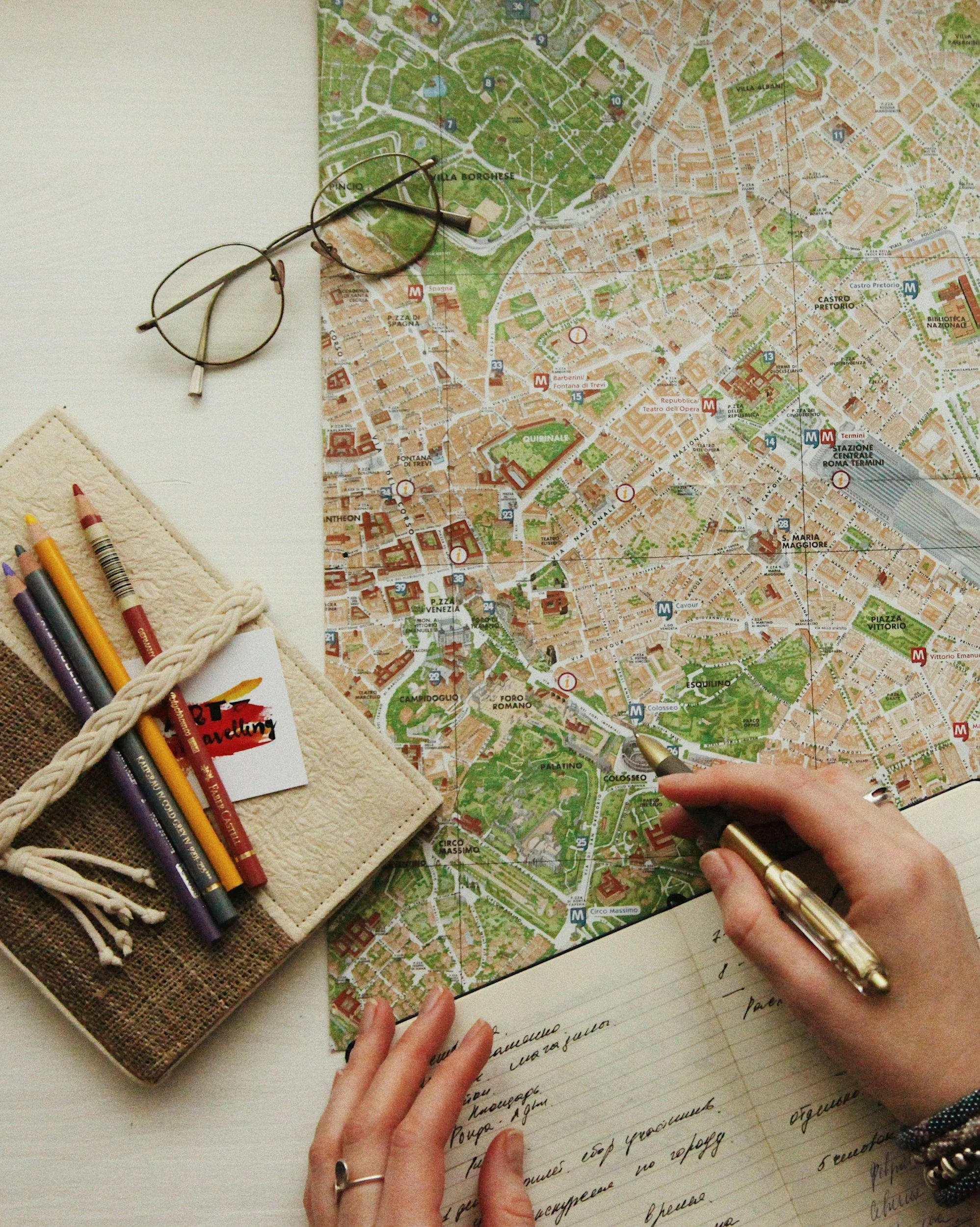
Image by @arttravelling from Unsplash
On the difference between what we think is happening and what actually is.
When we think of a map, plenty of things come to mind: roads, a destination in close-up. Zoom out and you see towns, suburbs. Zoom out further and states, districts, entire countries appear. They all tell a similar story. Territories are marked out, bordered, labelled, given the quiet suggestion of a boundary. This is where one place ends and another begins.
A map is knowing. It is the version of a place that lives in your head, the one you can study, memorise, and describe to someone else before you have ever set foot in it. A map will tell you what a place is. A school. A police station. A hospital. But nothing on it tells you what is actually happening inside. That only arrives through experiencing: the feeling of a place, lived through the body, not just seen from above.
Take planning a trip to a theme park. Research tells you roughly what is there, which rides are worth the queue, what the layout looks like before you have even set foot inside. That is knowing. But nothing on that map prepares you for what it actually feels like to be standing at the front of the queue, heart racing, the sun on your neck, the noise of the crowd pressing in. That is experiencing. Even the walk between rides feels different each time, even if you have visited the same park a dozen times before, because knowing a place does not change, but experiencing it always does.
This is not a new observation. The phrase "the map is not the territory" was coined by the philosopher Alfred Korzybski nearly a century ago, and it still holds. A map is a representation. A useful one, but a summary all the same. It cannot carry the weight of the real thing: the texture of the ground, the mood of the day, the tiredness settling into your legs. It can only ever tell your head. It cannot make your body feel it.
I learnt this properly climbing Mount Hallasan in Jeju. I had read about the trail, studied the maps, planned my route down to which path was gentler and which was steeper. I knew, in the way you know something from a page, exactly what to expect. None of it told me what it would actually feel like: the endless steps with no shortcuts, elderly hikers passing me with ease while I struggled to keep pace, the quiet moment of realising there was no way forward except through. Knowing had done what it could. Everything after that was experiencing, and it asked something of me that knowing never could. (I wrote more about that climb, and what it taught me, in If Humans Were Spaghetti.)
Knowing is useful. It gives direction, a sense of what to expect, something to hold onto before you begin. But it is only ever a sketch of the thing, held at arm's length. Experiencing is where the real lesson waits, in the walking of it, the living of it, the feeling of it in your own body.
So take the map. Just do not mistake knowing it for having lived it.
Perhaps today, pause before you assume that knowing something in your head means you understand it. You might be standing at the edge of an experience that asks far more of you than the page ever did.
