
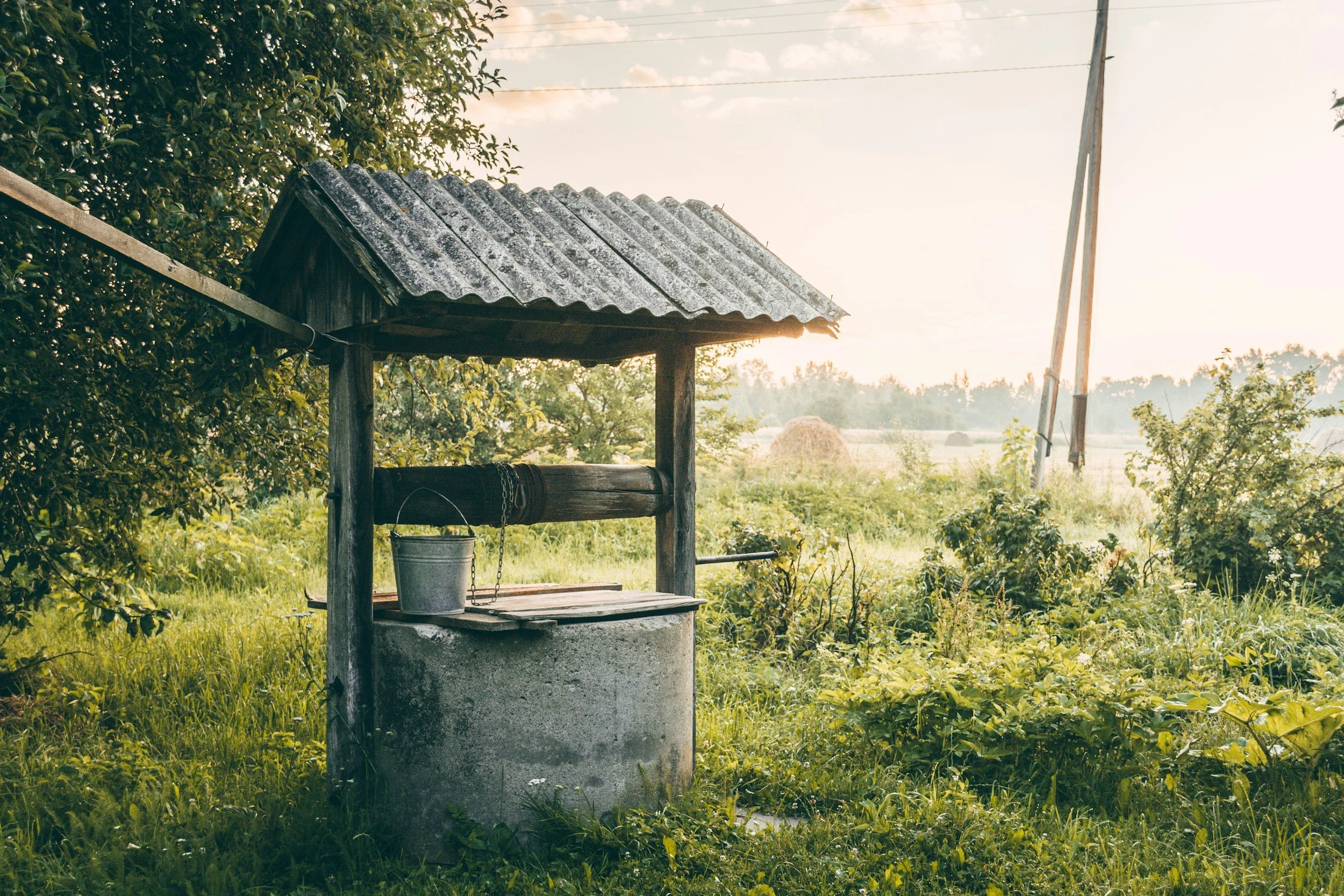
Image by @palibrix from Unsplash
The one caring for it does.
There is something worth stopping at when you pass an old well.
Not the kind you scroll past in a travel photo, prettily mossy and ornamental. The real kind. The working kind. The one a household depended on, that had to be tended, checked, and replenished — or else.
A well does not apologise for running dry. It simply is what it is: empty. It has no obligation to manage your expectations about what is left inside it. It holds what it holds. When it is gone, it is gone.
The one who tends it, however — now that is a different story.
We are quite good at checking on external things.
We notice when the rice jar is low. We make a mental note, add it to the list, pick it up before the week is out. We would not dream of standing at an empty pantry shelf, arms crossed, glaring at the container as though it had personally failed us. We restock. That is simply what you do.
And yet, when it comes to ourselves — our own reserves of energy, attention, patience, joy — we behave as though the rules are different. We run the tank down to the very bottom. We ignore the signals. We keep drawing from something that stopped refilling a long time ago, and then we are genuinely surprised when there is nothing left.
The well did not empty overnight. It rarely does.
If someone notices a well running low, they do one of two things: they find a way to replenish it, or they dig for another source entirely. Either way, the response is active. Intentional. They do not wait for the well to sort itself out.
We call this stewardship. A well-caretaker — and yes, I am inventing that term, and I think it is worth keeping — does not wait for crisis. They monitor. They respond before it becomes urgent. They understand that the well does not belong only to them; it serves everyone who depends on it. Which means tending it is not a luxury. It is a responsibility.
So here is the question worth sitting with today:
Who is tending your well?
Not in the vague, aspirational sense. Concretely. What does your human inventory actually look like right now? Not what you wish it looked like — what it truly is.
Are you running at capacity, or running on fumes? Are you drawing from a full well, or scraping at the bottom and calling it discipline?
There is a kind of pride we wear around emptiness. Running on little sleep, stretched across too many commitments, always available and always on — we treat this as proof of something admirable. We have confused depletion with dedication.
But a dry well is not a productive well. It is just dry.
What we produce from a depleted place rarely resembles what we are actually capable of. We know this. We have seen it in ourselves — the short temper, the foggy thinking, the decisions made from exhaustion rather than clarity. The quality of what we offer the world is inseparable from the quality of what we have tended within ourselves.
You cannot give what you do not have.
The lesson from the well is not complicated. It is not even new. But like most things worth knowing, it is far easier to understand than to practise.
Stock the pantry before it is bare. Fill the well before it runs dry. Tend yourself with at least the same consistency you tend everything else that matters to you.
The well will not apologise for being empty.
But you, as its caretaker — you have a say in whether it ever gets there.
