
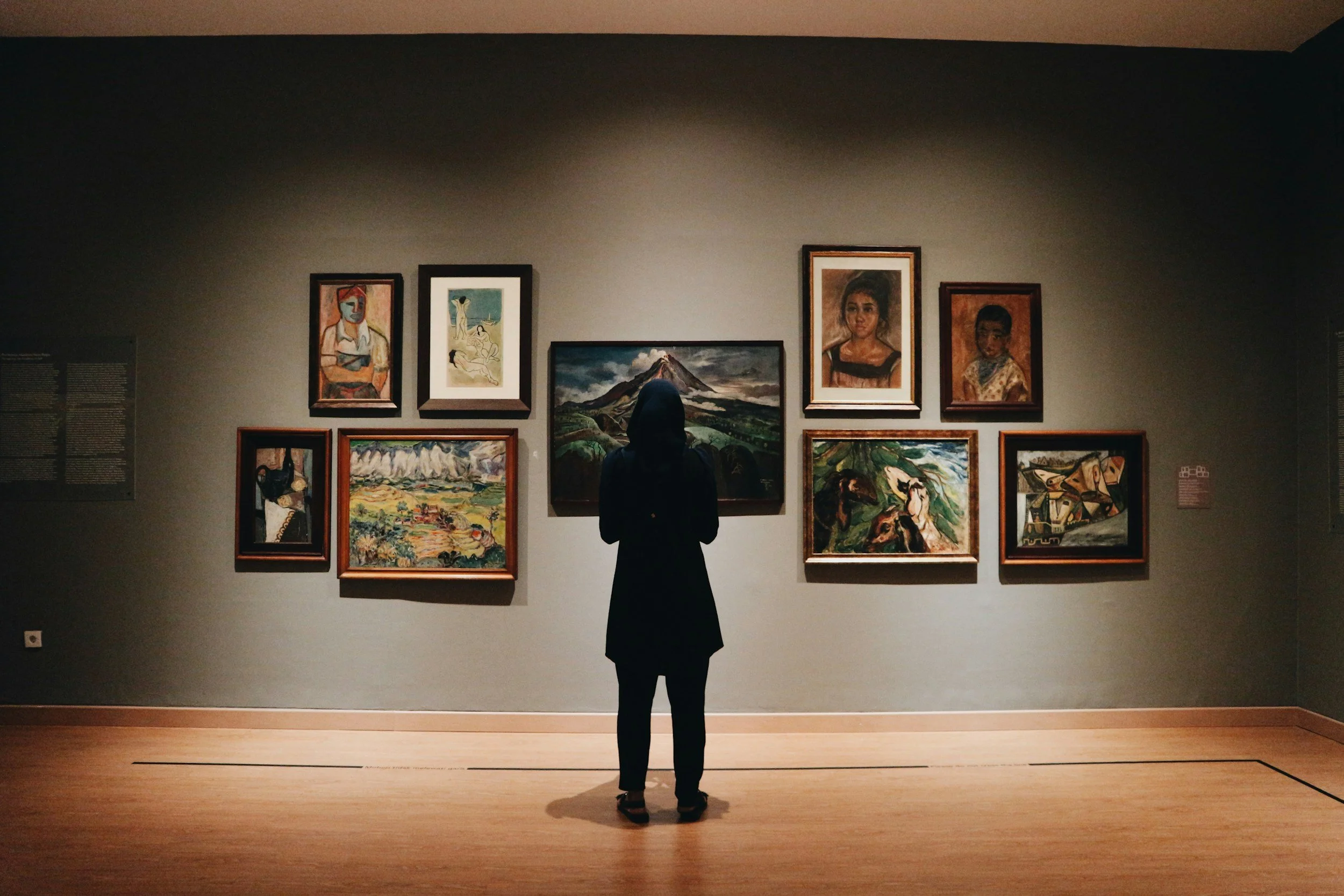
Image by @zalfaimani from Unsplash
Distance is not detachment. It is clarity.
Have you ever stood in front of a picture, so close that all you could make out was colour and texture, and tried to guess what it was? Then stepped back, only to find the image was nothing like what you'd expected, or exactly like it, just clearer this time.
I have. And it taught me something about myopia.
Not the kind that sends you to the optometrist, but the kind that quietly shapes how we live. Myopia happens when we get so close to a moment that we lose the frame around it. We fixate on the detail directly in front of us and mistake it for the whole picture. We stop asking what else the moment might be trying to show us.
It happens at work, when one setback feels like the end of a project rather than a single brushstroke in a much longer piece. It happens in relationships, when one disagreement gets read as the whole relationship's temperature. It happens with ourselves, when a hard week convinces us we have always struggled, and always will.
Close up, everything looks urgent. Step back, and most of it settles into proportion.
I notice this most clearly in the kitchen. Sometimes I taste a dish just before serving, and something feels off. Not wrong exactly, just incomplete. I can't name what's missing, only that it's missing. That's when I call my husband over to taste it. Nine times out of ten, he names the gap in seconds: ingredient x. He is a better cook than me. He's simply not standing where I'm standing. He hasn't been smelling the same pot for twenty minutes, adjusting in tiny increments he's stopped noticing.
This is why I keep people close who are willing to tell me what I cannot see from where I'm standing. My closest friends know they're allowed, expected even, to say the uncomfortable thing plainly. And when I'm working on a project with a team, I ask them directly to be my blind spot checkers. Not to flatter my plan, but to stand at a different angle and tell me honestly what the painting, or the dish, looks like from there.
It's a small discipline, but not an easy one. Asking "what am I missing?" means admitting that the version of you standing too close cannot answer that question alone.
The painting doesn't change when you step back. It was always the same painting. What changes is you: your position, your distance, your willingness to see it whole rather than in fragments.
Perhaps the practice, then, isn't reserved for the big decisions. Perhaps it's a Monday habit. Before reacting to the message, the setback, the disappointing meeting, step back. Not away. Back. Just enough to see the frame again.
