
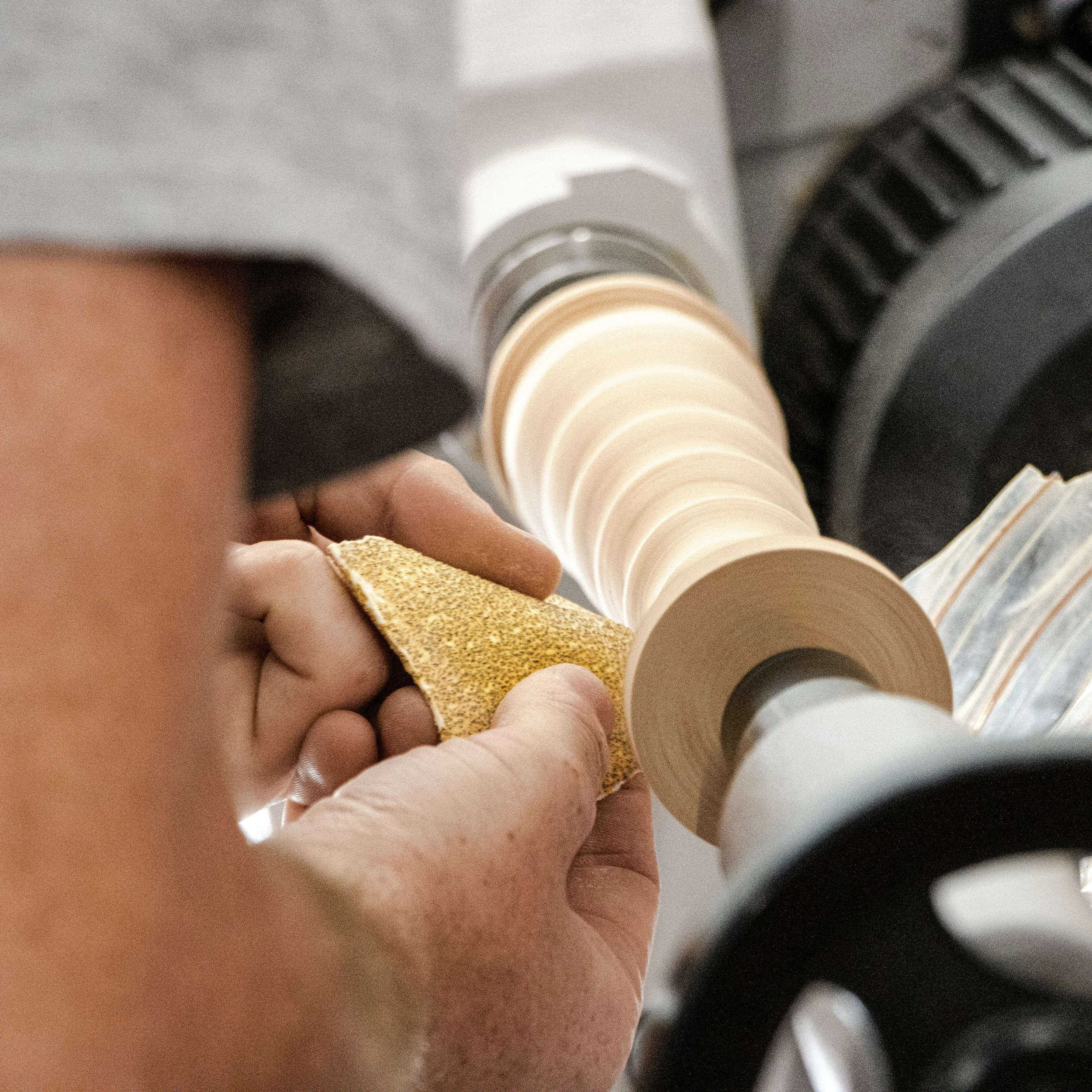
Image by @ledainelliott from Unsplash
No one enjoys being uncomfortable. No one volunteers for criticism, especially when it arrives with a sharp edge and no kindness behind it. And yet, there is a particular kind of discomfort — the well-intentioned kind — that does not wound. It shapes.
Sandpaper is an apt teacher here.
Run your finger along its surface and you feel it immediately: coarse, almost aggressive, nothing like the smooth result it is meant to produce. It seems counterintuitive. How does something so rough create something so refined? But that is precisely the point. You would not use a soft cloth on raw timber — it would simply tear. The roughness of the sandpaper is not a flaw in its design. It is the design. Without that friction, the wood stays splintered and unfinished. The polish that follows — the one that makes a piece of furniture beautiful — is only possible because the rough work happened first.
I was reminded of this years ago in a Design and Technology class at school. We built things with our hands: a pencil holder from acrylic and wood, a letter opener from cut and soldered metal, a small shelf I still remember being quietly proud of. Every project that had wood in it ended the same way — with sandpaper. You had to smooth the surface before you could finish it, because if you ran your fingers along an unfinished edge, you would get splinters. And no one wants a piece of furniture that draws blood.
That image has stayed with me: the rough thing that makes way for the beautiful thing.
There is a reason the proverb says iron sharpens iron. A sculptor does not apologise for the chisel. The resistance is the point — it removes what does not belong so that what remains can stand clearly. In the same way, seasons of friction in our lives are not evidence that something has gone wrong. They are often evidence that something is being made right, or at least, made ready.
In If Humans Were Spaghetti, I wrote about heat as a refining force. True gold does not fear the fire — the fire is what reveals the gold. Sandpaper works on a similar principle: it does not diminish the wood. It reveals the grain that was always there, waiting beneath the rough surface.
The difficult conversations, the honest feedback that stings, the season that stretched you further than you thought you could go — these are not punishments. They are preparation. They equip us for what lies ahead, so that when the pressure comes, we are not caught completely unguarded. We may still flinch. We may still feel the friction. But we are not undone by it.
The point of all this sandpaper-ing is never to sand us down into nothing. It is to bring out what is already there — to refine, to reveal, and ultimately, to release something polished rather than diminished.
So here is the question worth sitting with this week.
What's been the sandpaper in your season? What areas of your life do you think need a little sandpaper-ing?
If this resonated with you, you might also enjoy If Humans Were Spaghetti — a short book exploring how everyday moments, including the uncomfortable ones, quietly shape who we are becoming.
Pass this along to someone who needs the reminder that the rough things are not against them.
