
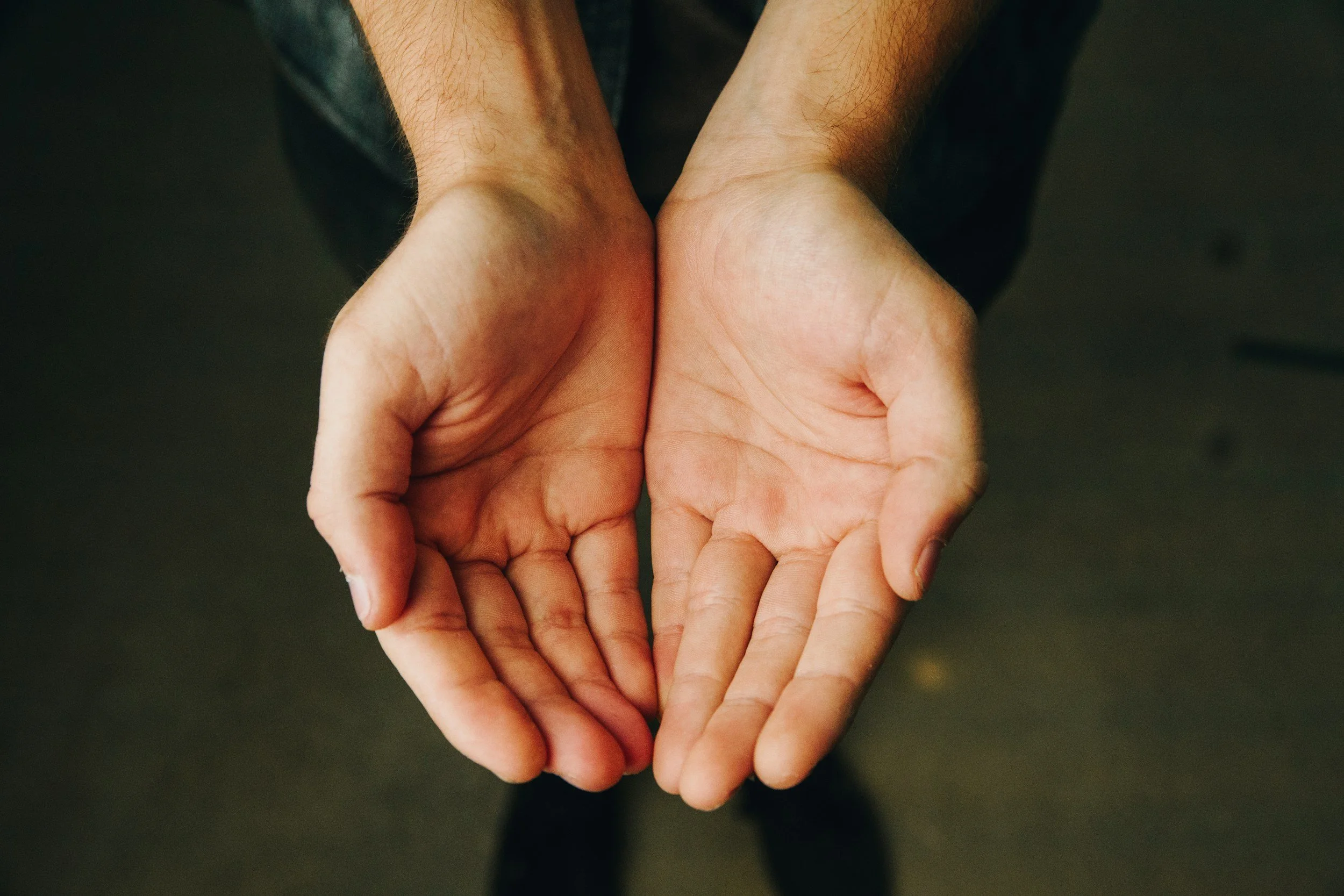
Image by @mocaandrew from Unsplash
On what becomes possible only after you've let something go.
Picture a relay, the kind played at a school field day or a work retreat. A pile of small items sits at one end: bean bags, rings, cotton balls. The task is simple. Run down, scoop up as many as your curved hands can hold, and race back before your team-mate takes over.
Most people try to be efficient. They cup their palms, stack the items as high as they dare, and set off at a careful jog, terrified that one wrong step will send everything tumbling. It rarely works. Something always slips. A bean bag rolls into the grass. A ring drops halfway. What was meant to save time costs more of it, in the bending, the fumbling, the second attempt.
There is a moment, watching this, that is easy to miss if you are not paying attention. The moment someone simply stops trying to carry it all. They empty their hands, sometimes tipping everything straight back onto the pile, and they run the distance again. And again, if needed. No item is lost. No trip is wasted. It simply takes more trips.
It looks, at first glance, like defeat. Empty hands, at a race that rewards speed and volume. But watch closely and you will notice: the player with empty hands moves faster. They are no longer managing the risk of dropping something. They are no longer straining to hold what should never have been held all at once. Their hands are free, and free hands run true.
I think about this far more than a children's game deserves, because most of us are still standing at that starting line somewhere in our lives, convinced that one trip should be enough. We stack the bean bags of everything we are meant to be: a good employee, a devoted parent, a reliable friend, someone still quietly working on their own healing. We add old griefs we never quite put down, opinions we cling to so no one accuses us of being uncertain, achievements we won't release because letting go feels like losing them. Our hands curve tighter and tighter around all of it.
And then we wonder why we are always a little unsteady, why the smallest bump sends something crashing.
Emptying our hands is not the same as giving up. It is not admitting that the items do not matter. It is recognising, quite simply, that no pair of hands, however capable, was built to carry everything at once. There will be another trip. There is almost always another trip. The relay does not end because you chose to run it twice.
What waits for us on the other side of empty hands is rarely nothing. It is room. Room to pick up something we could not see before, because our hands were already full. Room to receive help, or an idea, or a piece of good news, without having to shift things around first to make space. Room to run, properly run, rather than shuffle under a load we never needed to carry alone.
The Mona Lisa did not become interesting because someone crammed more into the frame. She rewards you precisely because there is so little demanding your attention, and so much left for you to notice once you slow down enough to look.
Perhaps this week is not about carrying more. Perhaps it is about noticing what you have been clutching out of habit rather than need, and asking yourself a quieter question: what might I finally be able to hold, if I put this down first?
