
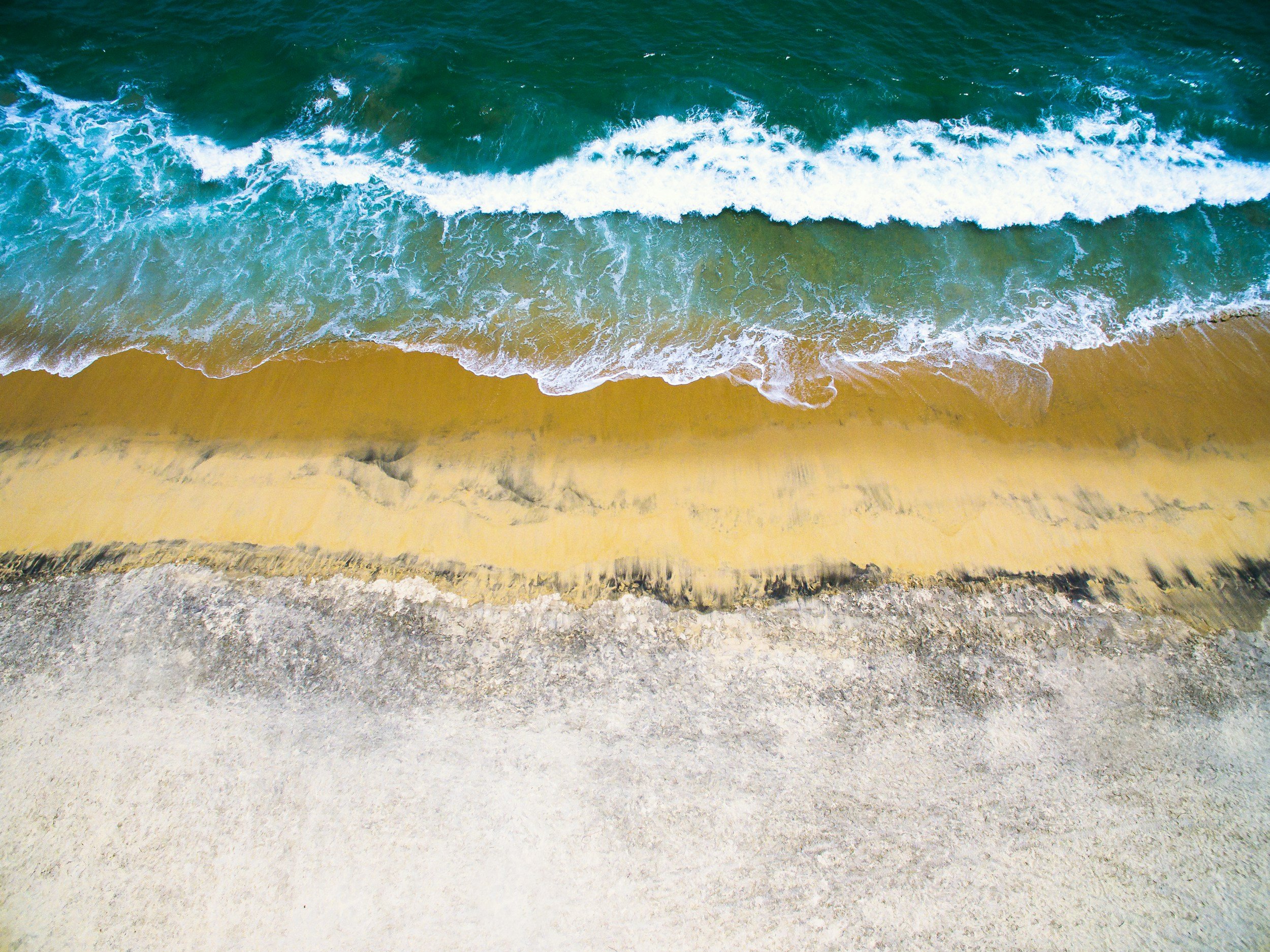
Image by @marcosamaniego from Unsplash
In the Pirates of the Caribbean, the ocean is where everything is tested. The battles, the storms, the moments that strip a person down to what they are truly made of — they all happen out at sea. But if you watch closely, the shore is where everything begins. The plotting, the preparing, the alliances quietly formed over rum and questionable maps. The shore is where the pirates become who they need to be, before the ocean asks anything of them.
And when the battle is over — when the ship is battered and the crew is spent — they return to shore. Not in defeat, but to rest. To recalibrate. To gather what they will need before they sail again.
Captain Jack Sparrow looks like he improvises everything. But he always has a plan. He just knows that once you are in open water, the plan will need to bend.
I think about that a lot.
There is something about the ocean that unsettles me, even when it is beautiful. Perhaps it is the vastness. Perhaps it is the fact that I have nearly drowned twice. Whatever the reason, open water and I have a quiet understanding: I respect it, and it occasionally tries to humiliate me.
So of course, I found myself on a jet ski.
Riding tandem, moving at speed — there is a moment in that kind of adventure where everything feels exhilarating. The wind, the spray, the particular joy of moving fast across open water. And then you hit a wave. Not a gentle ripple, but one that jolts the whole craft sideways and makes you grip with everything you have. Each time we struck a bigger swell, it nearly threw us. I became very aware of my life vest. I was equally aware that I did not want to be the one someone pointed at when they shouted "man overboard."
At a certain point, I wanted to go back to shore.
Not because the adventure wasn't worth it — it was. But the shore was visible. And visible safety is a powerful thing when the water beneath you is unpredictable. Captain Jack Sparrow would have leaned into the chaos and grinned. I just held on tighter and kept my eyes on the shoreline.
We made it back. Standing on solid ground, life vest still on, a little shaken and quietly grateful, I felt something I can only describe as clean: I am safe. That was hard. I am glad I went.
But here is what I didn't understand until much later.
The shore had been preparing me all along. I just didn't know yet what I was being prepared for.
There came a season in my life that arrived without warning and without a map.
Someone I loved deeply needed medical care, and I was the one there. Far from home. Far from everyone I knew. In a new environment, navigating systems I didn't fully understand, making decisions I wasn't always certain were right. The person I would normally have leaned on was the very person I was trying to be strong for.
That is a particular kind of alone that is difficult to explain. You are not abandoned. You are loved. And yet the weight of it sits entirely on you, because the one who would usually help you carry it is the reason you are carrying it in the first place.
I didn't want to trouble anyone. So I carried more than I should have. The waiting, the running of errands, the drives to and fro home where I told myself I was fine because there was no one around to hear if I said otherwise.
It is a strange and particular loneliness — needing a shoulder and deciding not to ask for one. Not out of strength, but out of a misplaced sense that needing people is the same as failing them.
I was out at sea. And I had forgotten how to look for shore.
And then, quietly, it appeared.
A small community reached out. Not in grand gestures — I don't remember grand gestures. I remember specific, unhurried things. A message that said simply, I was just thinking of you. Someone who didn't just ask "are you okay?" but "how can I help?" A person who sat with me without needing to fix anything, who understood that sometimes presence is the whole point.
These people didn't know they were the shore I was navigating towards. But they were. They were the visible point that kept me moving when the water felt too wide.
I had been too cautious, too afraid, to reach out myself. But grace, I have found, does not always wait for you to ask. Sometimes it simply shows up and holds the ground while you find your footing again.
The return to shore, when it finally came, was not dramatic. There was no triumphant arrival, no clear moment where the season ended and something easier began. It was more like the tide gradually settling. The adrenaline fading. The slow, quiet work of putting things back in order — inside and out.
I needed that time. To rest properly. To let what had happened become something I had lived through rather than something I was still surviving. To gather, slowly, what I would need for whatever came next.
Because that is what the shore is for. Not escape. Not permanent safety. But the place where you recover what the ocean spent, where you integrate what the waves taught you, where you remember who you are before the next crossing asks you to prove it again.
The pirates know this. They don't live at sea and they don't hide on shore. They move between the two with intention — each crossing informing the next.
Looking back, that season changed me in ways I am still discovering.
I am more attuned now to the particular quietness of someone who says they are fine and means the opposite. I reach out sooner — even when I am not sure what to say — because I know what it meant when someone reached out to me. I have learnt, slowly and imperfectly, that needing people is not weakness. It is, in fact, one of the most human things there is.
I would not undo that season. Not the exhaustion, not the loneliness, not the fear of getting things wrong. Because what came from it — the clarity, the compassion, the capacity to be a better shore for others — is mine in a way that easier seasons never gave me.
The ocean shaped me. The shore held me. And the gratitude I carry now is not for the absence of hard things, but for the grace that met me in the middle of them.
