
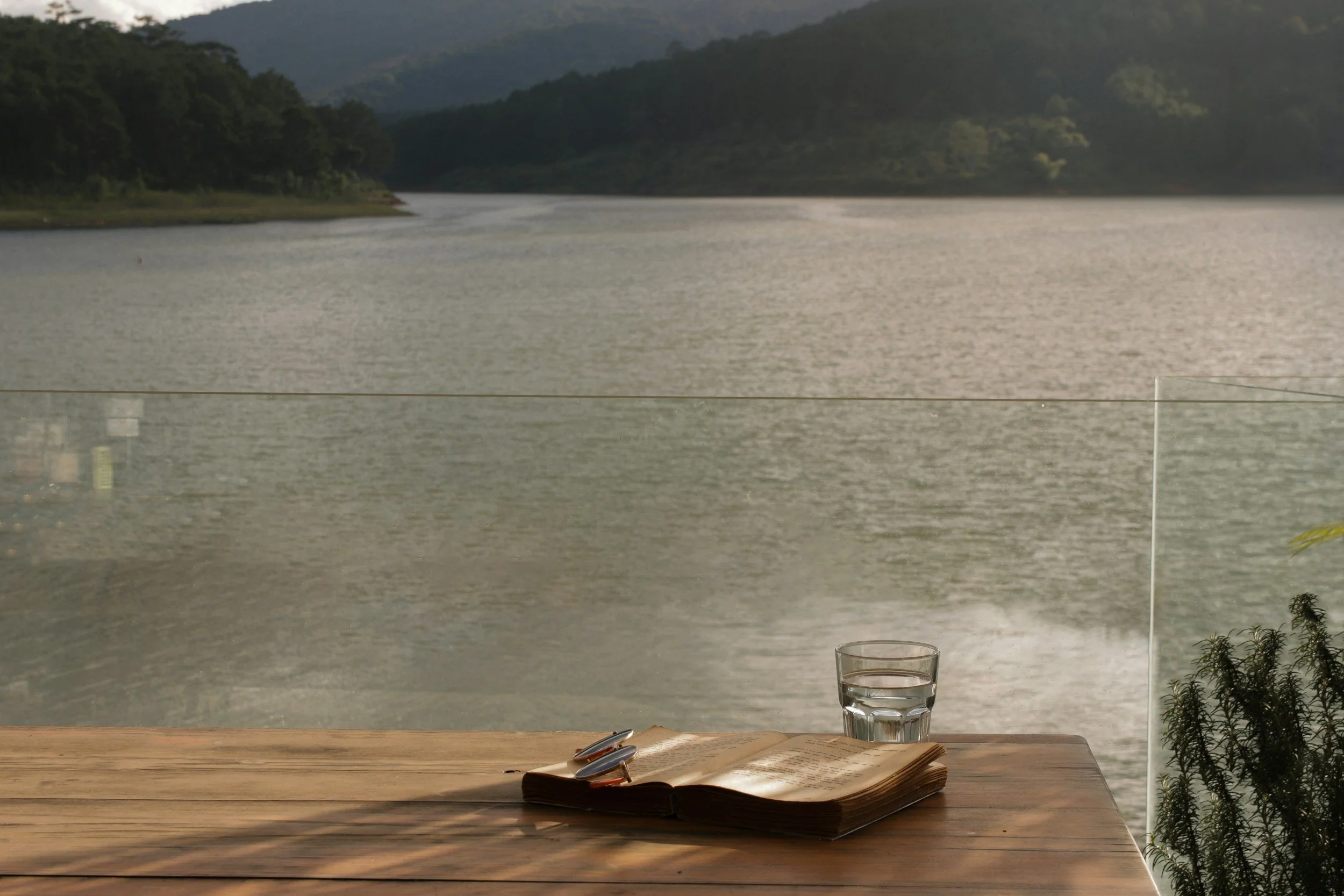
Image by @donhu06 from Unsplash
Let's get something straight. When I say "doing nothing," I do not mean being careless or irresponsible. And my verdict on that guilt you're carrying?
Not guilty.
We live in a world that has its foot permanently on the accelerator. Even at amber lights, we push harder — because stopping feels like losing. Nobody wants to be the one sitting at the red light, waiting. Waiting feels wasteful. Waiting feels weak. And in an age of instant gratification, waiting feels practically criminal.
So we keep going. And going. Until we forget what stillness even feels like.
I see it clearly with my young nephew and niece. Take away the phone and the television, and within seconds: "I'm so bored." There is a kind of panic in it, actually — as though the absence of stimulation is something to be fixed immediately.
I grew up differently. We had to find things to entertain ourselves. That sometimes meant reading the ingredients on the shampoo bottle whilst sitting on the toilet. Or running to a neighbour's door to ask if they fancied a game of badminton. Boredom was not a crisis — it was an invitation. And from that invitation, creativity followed.
Somewhere along the way, that got lost.
We started treating rest like laziness. Stillness like stagnation. The moment the diary clears, we fill it again — because an empty slot feels like a problem to solve rather than a gift to receive.
But here is what I have noticed, as I have mellowed with age: some of my clearest thinking happens when I am not doing anything particularly productive. Sitting with a book and a cup of coffee. Watching people pass by — how they carry themselves, what expression sits on their faces (though that is getting harder to read when everyone is staring at their phones as they walk, but that is a conversation for another day).
It is in the slowing down that the bigger picture comes back into focus. You cannot see the whole canvas when your nose is pressed against it.
In If Humans Were Spaghetti, I write about the pianist preparing for an exam. Weeks of practice, scales repeated, pieces refined. And then comes a day when the fingers stumble, the timing slips, and the harder you push, the more mistakes appear. That is exactly the moment rest is needed — not as retreat, but as recalibration. Step away. Let the emotion settle. And when you return, the music flows again — not because you forced it, but because you gave yourself room to breathe.
Rest is not the absence of progress. Rest is part of progress.
Consider what happens when you sleep. Your body does not clock off — your liver, your immune system, your brain are all quietly at work, resetting and repairing so that you can function well the next day. You are not doing nothing. You are allowing something necessary to happen beneath the surface.
The same is true when you sit quietly with your thoughts. Or take a walk without a destination. Or simply let an afternoon pass without a to-do list attached to it.
Giving yourself permission to rest is not skiving. It is not indulgence. It is not something you need to justify or apologise for.
It is recalibration.
And you are allowed it.
Be kind to yourself. Be nice. The guilt of doing nothing is not a verdict — it is a habit. And habits, thankfully, can be unlearned.
Which chapter of life are you in right now — the one where you keep pushing, or the one where you are finally learning to pause?
