
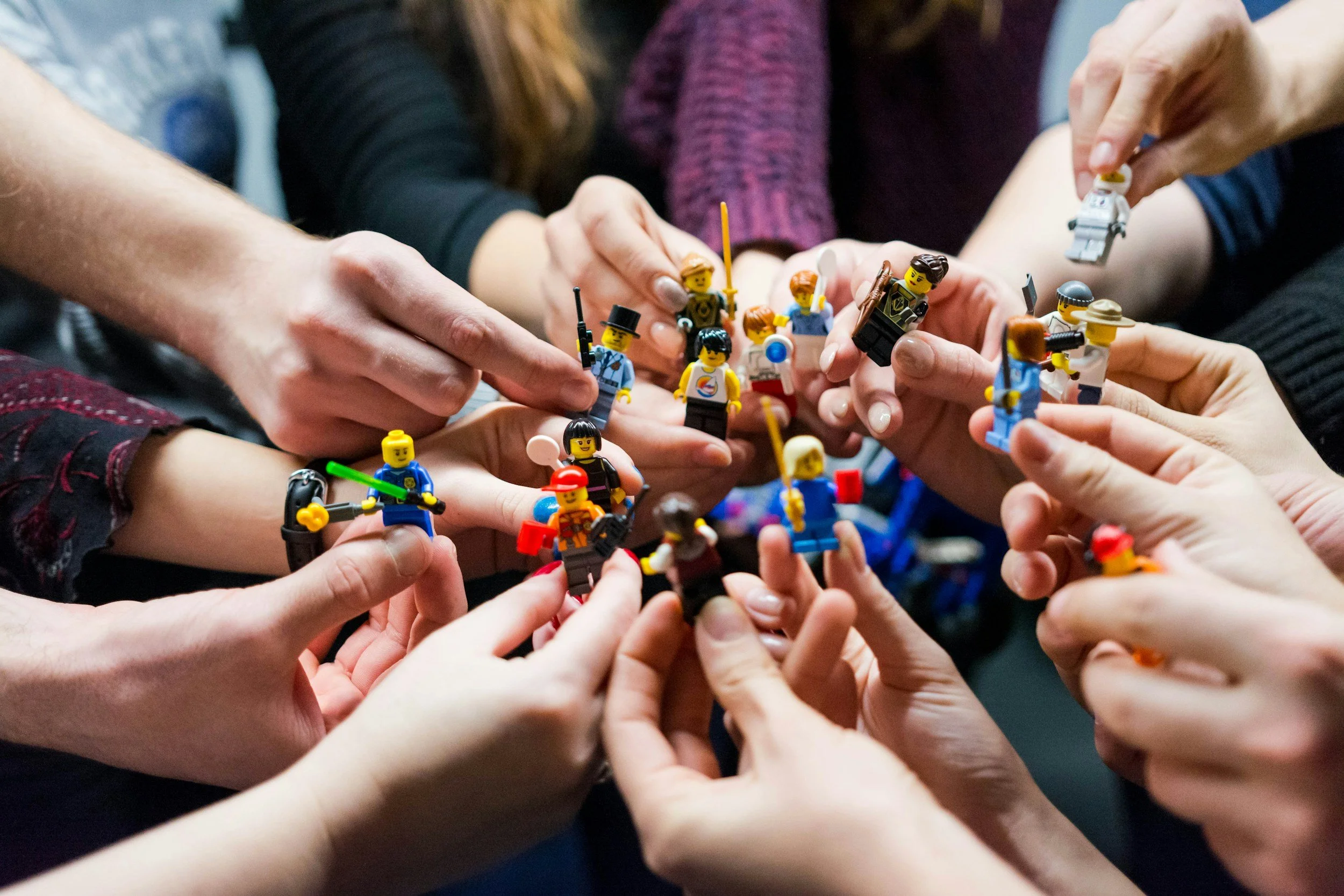
Image by @vladhilitanu from Unsplash
Upskill. Upgrade. Stay current.
Nothing wrong with any of that. In a world that moves quickly, keeping your knowledge sharp matters. But there is a version of professional development that looks thorough on paper and still misses something essential.
Think of a computer. You can have the most powerful hardware available — the fastest processor, the most memory, all of it. But if the software is incompatible, or simply neglected, none of that hardware means very much. It sits there, capable and idle.
People are not that different.
We can accumulate knowledge, certifications, and technical ability, and still walk into a room and make everyone feel invisible. Hard skills open doors. Soft skills determine what happens once you are inside. The emotional intelligence to read a room. The empathy to notice when someone is quietly struggling. The simple discipline of asking, genuinely, how are you?
These things are not soft in the way we sometimes mean it — vague, optional, a little fluffy. They are load-bearing. They are what hold a team together when the pressure is on.
What a team actually looks like under pressure
My husband and I have been watching S.W.A.T. over meals recently, and I keep finding myself thinking about what makes that team work. On the surface, it looks like action and adrenaline. But underneath, it is something quieter — and far more instructive.
Each member brings something distinct, and none of it is interchangeable.
Hondo leads with conviction and earns trust before he demands it. His strength is not authority for its own sake — it is knowing his people well enough to deploy them wisely, and caring about the community they serve as much as the mission itself.
Deacon is the steady hand. When pressure spikes and everything feels uncertain, he is the one people instinctively look to. Not because he shouts the loudest, but because he never rattles. He is the team's moral compass, the one who keeps them grounded when the heat is on.
Luca handles the hard, unglamorous work without complaint. Breaching, close-quarters — the stuff that requires physical courage and the kind of reliability that cannot be faked. He also brings a warmth that keeps the team human, even in the middle of high-stakes moments.
Chris is the sniper. Which means her greatest skill is not speed or strength — it is patience. She can hold a position, observe without acting, and wait for exactly the right moment. In a world that rewards the loudest and fastest, that kind of disciplined stillness is rarer than it looks.
Tan is the team's eyes before anyone else moves. Drones, surveillance cameras, the small devices that let the team see around corners before they step into the room. He gives the team information and visibility before the situation becomes a crisis. Not always the first name you think of in a debrief — but often the reason things went right.
Street brings something no training programme can fully replicate: lived experience and emotional intuition. His background makes him perceptive in ways others are not. He reads people quickly, adapts instinctively, and understands how someone on the edge of a situation is likely to behave — because he has been there himself.
None of them tries to be someone else. None of them outshines the others by dimming everyone around them. They shine together, because each person shows up fully as themselves — and trusts that the others will do the same.
There is one more thing the team does that most workplaces do not
Before a mission, if something is off — a personal issue unresolved, a conflict left hanging, an emotional weight being carried — it gets named. Not dragged into lengthy discussion, not weaponised, not used against anyone later. Simply acknowledged, in a space where it is safe to do so.
Because on a SWAT team, your emotional and mental state does not stay private in the way it might behind a desk. If your mind is elsewhere, the person next to you feels it. If you are distracted, someone else has to compensate without knowing why. If you are carrying something heavy and say nothing, that weight does not disappear — it just becomes invisible risk.
So they say it out. I am not in the best headspace today. There is something going on at home. I am carrying this — you should know.
Not as weakness. As professionalism.
And the team holds it without judgement, adjusts without resentment, and moves forward together.
Most workplaces are nowhere near this. We are trained to compartmentalise, to perform competence regardless of what is happening beneath the surface, to treat emotional honesty as oversharing. And then we wonder why people quietly disengage, why trust erodes slowly, why someone eventually breaks in ways no one saw coming.
Psychological safety is not a workshop topic. It is not a value written on a wall. It is what you build when people consistently experience that telling the truth about where they are — within appropriate boundaries, in a space that honours that honesty — does not cost them anything.
That kind of openness does not emerge on its own. Someone has to model it first — and in most teams, that falls to the person at the front.
A team that has that moves differently. Not because everyone is always fine, but because no one has to pretend they are.
Colleagues may not be like family. But they are not strangers either.
There is a conversation that keeps circulating in workplace culture: your colleagues are not your family. And there is truth in that. You did not choose them. You may not particularly like all of them. The relationship is professional, not unconditional.
But I think the framing misses something important. Family may not be the right word. What I would say instead is this: your colleagues are people whose success and failure is genuinely connected to yours. That is not sentiment — that is simply how teams function.
When one person drops the ball, everyone scrambles to recover. When one person does something exceptional, it lifts the whole effort. You do not have to love each other. But you do need to understand each other well enough to know where the gaps are, who needs support, and when to step in without being asked.
That requires more than a skills matrix. It requires attention.
Strength is not sameness
The most functional teams are not made up of people who all do the same thing well. They are made up of people who know what they each bring — and who resist the temptation to either hide behind one another or quietly compete.
Working in a team does not mean your individual weaknesses become someone else's permanent responsibility. It means being honest about them, continuing to work on them, and in the meantime, knowing how to lean on the right person without making that leaning a habit. Interdependence is not the same as dependence. One makes a team stronger. The other quietly hollows it out.
Every team needs a Hondo who leads with both conviction and care. A Deacon who holds steady when others wobble. A Luca who does the hard work without needing applause. A Chris who knows when not to act. A Tan who sees what others have not noticed yet. A Street who understands the human side of every situation.
And when something is genuinely at stake — when the mission matters — the team that has done the quieter work will be the one that holds together. The check-ins. The honest conversations. The unglamorous effort of actually knowing one another.
No training session teaches that. It is built slowly, in the ordinary moments between the high-stakes ones.
The next time you sit down with your team, skip the agenda for five minutes. Ask how people actually are. You might be surprised what a team can carry when it feels seen.
