
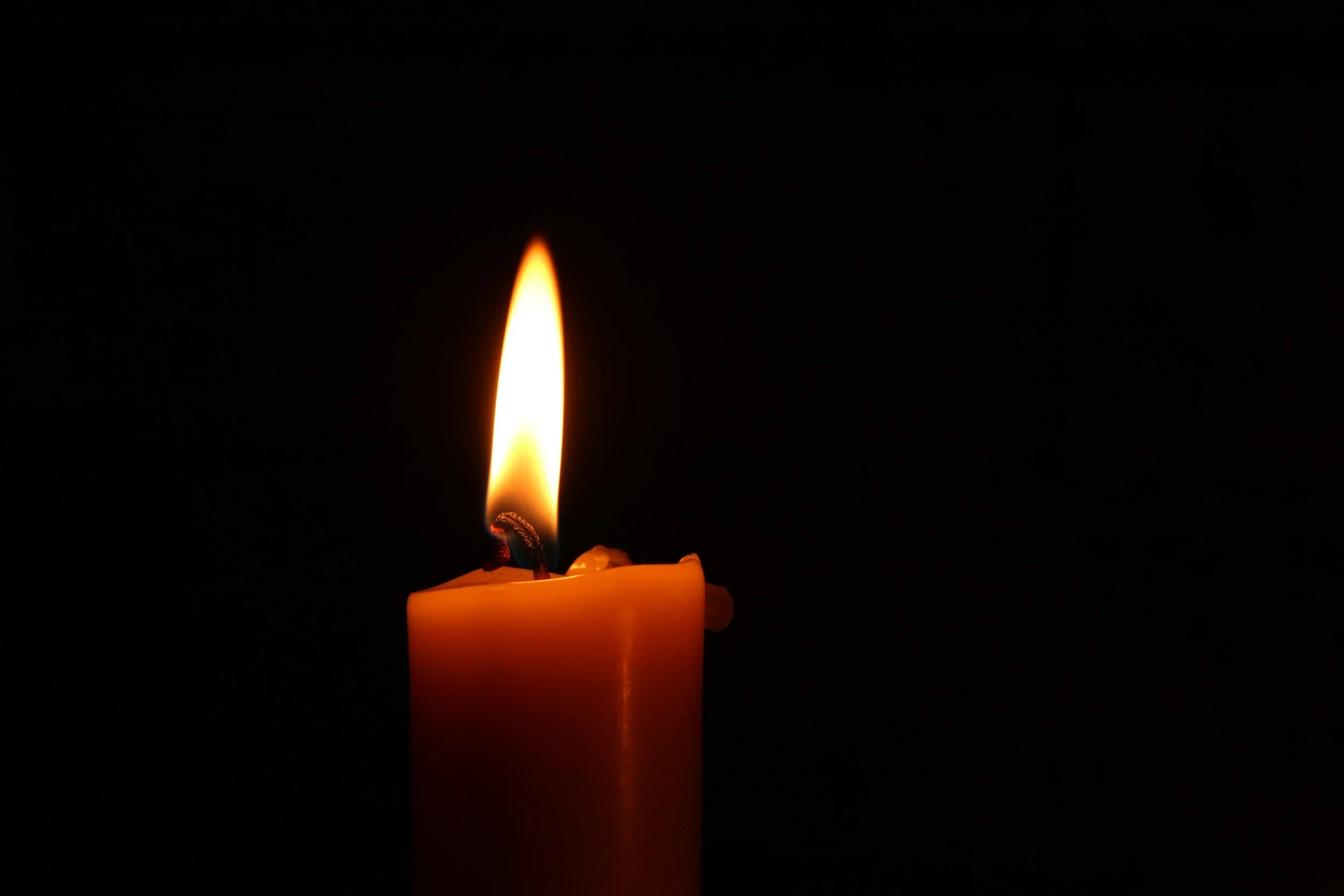
Image by @dtomaseti from Unsplash
There's something about a lit candle that pulls every eye in the room. Quiet. Steady. The same way the moon holds a dark sky without needing to explain itself.
And the strange part is this — the candle never moves, but the mood always does.
Set it in a candlestick on a table, and the room turns romantic.
Hand someone a lantern, and the same flame becomes the way forward.
Place it in a house of worship, and it turns solemn without anyone asking it to.
Light it during a blackout, and suddenly it isn't atmosphere. It's survival.
Same candle. Same flame. The meaning was never in the wax — it was in where it stood.
Here's what's easy to miss: the candle was never trying to light the whole room. It isn't a spotlight. It isn't built to flood a space — only to fill what's near it, just enough to see by.
That's not a limitation. That's the design.
We tend to measure light the way we measure everything else — by reach, by wattage, by how far it travels. So we look at a candle and call it modest. Small. Not quite enough.
But the candle was never asked to be the sun. It was asked to hold its ground in the dark, and it does — every time, without needing to be told.
And here's the part worth sitting with: a candle can light another candle without losing anything of its own. The flame doesn't split. It multiplies. It gives itself away and stays whole.
So if you've ever felt like a candle — small, steady, only lighting the few feet around you — that was never proof you weren't enough.
That was proof you were doing exactly what you were made to do.
