
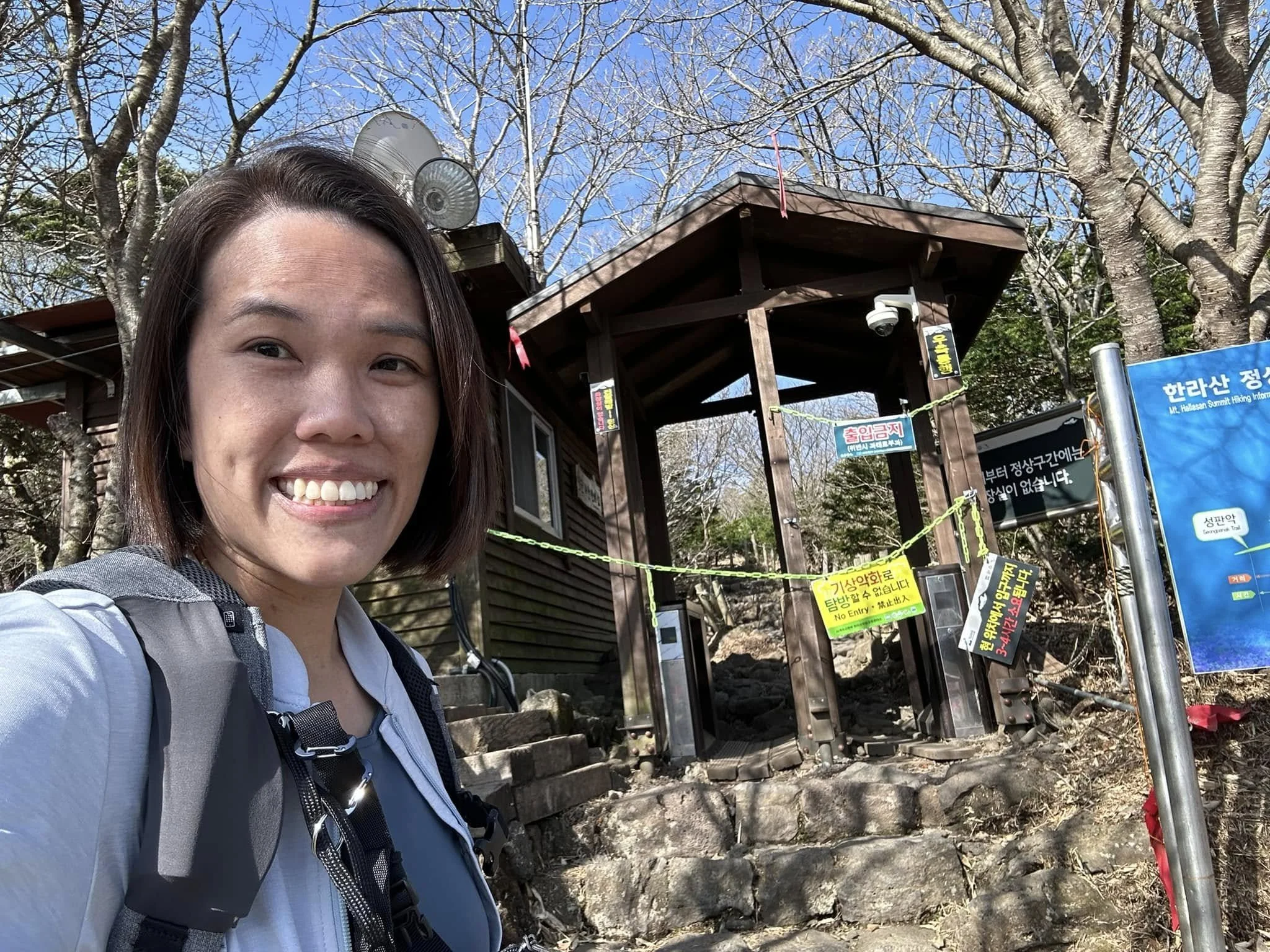
A few years ago, I set off on my first solo trip, to Jeju, and gave myself a challenge I was not entirely prepared for: climbing Mount Hallasan, South Korea's highest peak.
I chose the gentler trail up, telling myself I could always take the steeper route down if I felt strong enough. I did not feel strong enough. The climb was relentless, hours of steps and slopes with no shortcuts, and more than once I asked myself why I had thought this was a good idea. Elderly locals passed me with ease, chatting as they went, while I focused only on staying upright.
I nearly reached the summit. The final stretch was closed due to weather, just short of the top. I remember the specific disappointment of coming so close and having the decision made for me rather than by me. There was no bargaining with the mountain. I had to say goodbye to the summit I had not yet seen, and descend the same gruelling way I had climbed.
It took eight to ten hours in total, and days for the soreness to fade. For a while, I only remembered the parts that hurt.
Later, over a meal in Seoul, I told my sister and her colleagues about the climb, the disappointment included. I did not think much of it at the time. But one of them, who had planned to visit Jeju after the conference, went and reached the summit I had missed. I felt a flicker of envy, and then something warmer beneath it. My unfinished climb had, without my knowing, given someone else the nudge to attempt their own.
I did not get the ending I wanted. But the goodbye to that summit became, quietly and without my planning it, someone else's beginning.
This week, I am grateful for a goodbye I did not choose, because it turned out to carry more than I could see from where I was standing.
You may not get to see what your own unfinished stories give to someone else. That does not mean they give nothing.
