
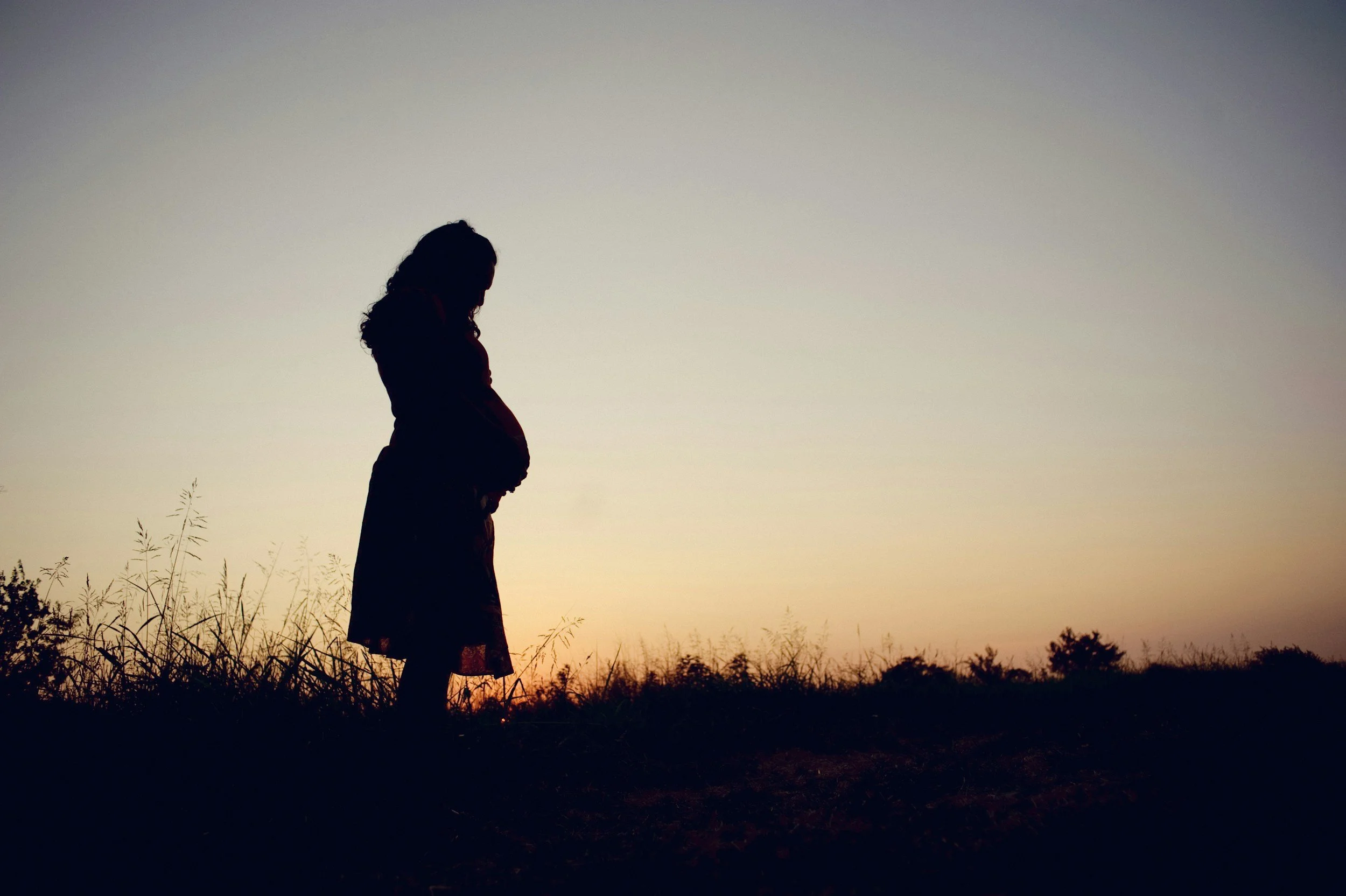
Image by @jlcoupaud from Unsplash
Before the first cry is even heard, she is already there.
Ten months of waiting, wondering, and carrying life within her — all while imagining who this little person might become. Her body changes, stretches, and gives in ways that are both visible and invisible, and long after pregnancy ends, the giving continues.
She is your mother. But she is also someone's daughter too.
In the family, she becomes the unofficial everything. Personal chef, organiser-in-chief, wardrobe manager, keeper of order, safety officer, and first responder to every scraped knee and small crisis. She knows where everything is — except, of course, her own phone, which is somehow always hiding in her bag.
She is your first debate opponent, the unexpected referee in sibling disputes, and the quiet peacemaker who ends every argument without needing recognition for it.
And still, at the end of the day, she makes sure you are safe, fed, and loved.
She is not perfect, and she never claimed to be. More often than not, she is simply trying her best in a world that expects her to be everything, everywhere, all at once.
This is what it looks like when you slow down enough to truly see someone. Not the polished version. The real one — the woman behind the role, carrying more than most people will ever know she carries.
I had the privilege of speaking with two working mothers recently. Their honesty offered a quiet reminder of what lies beneath the surface of an ordinary day.
Expectations vs Reality
Motherhood often begins in the mind long before it begins in the body.
A mother I spoke with saw it as a simple, expected path—study, marry, then children. She entered it with careful plans and high expectations, believing that preparation might soften what was ahead. Reality unfolded differently. Breastfeeding brought struggle. Identity shifted gradually. She found herself learning not only how to care for a child, but how to understand herself in the process — a quieter, slower education than any she had anticipated.
Another mother I spoke with experienced something altogether different in those first moments: love that arrived instantly, deep and consuming and unexpected. With it came constant worry, even in moments of calm. She realised early that motherhood was not only about responsibility — it was about how completely the heart can expand for someone newly known.
Work, Identity, and the Constant Balancing Act
For working mothers, the weight is particular:
It is not simply tiredness. It is the kind of exhaustion that has no clean edges — the kind that follows you from the office into the car, from the car into the kitchen, and from the kitchen into the quiet after everyone is asleep, where you finally sit down and wonder if you gave enough. To your children. To your work. To yourself. The answer rarely feels like yes, and that is the cruellest part of it.
The world does not make it easy. Meetings do not pause for sick children. Deadlines do not soften for sleepless nights. And through it all, the working mother is expected to show up fully — professionally composed, emotionally present, and somehow unbroken by the distance between who she is at work and who her children need her to be at home.
For both women I spoke with, work and motherhood were never separate worlds. They were overlapping demands pulling at the same heart.
The first moved between teaching and home, always mentally split between classroom and children. Illness in her family did not pause her professional world — it stretched her further. Over time, she and her husband found rhythm in the imbalance, learning to share the load not because it was equal, but because it was shared.
The other lived through a season where home and work blurred completely. Working during the pandemic meant exhaustion without boundaries — children needing her as deadlines closed in, guilt remaining constant despite support. She left, eventually — not because she couldn't manage, but because she refused to settle for a workplace that asked her to pretend her family came second.
To the mother who chose to stay home: you are not invisible, and your choice is not small:
In a world that measures worth by output and titles, the stay-at-home mother is too often overlooked — her days dismissed as quiet, her labour uncounted, her identity reduced to what she gave up rather than what she chose. But there is nothing passive about what she does. She is present in every ordinary moment that shapes a child's earliest understanding of the world. She is the constant when everything else changes.
Whether she chose it freely, or circumstances made the choice for her, she shows up every single day without a performance review, without a salary, and without the small professional affirmations that remind the rest of us we are doing well.
She is doing well. She needs to hear it too.
Strength in the Hardest Seasons
Strength, for both women, was not something declared. It was something carried quietly.
For the first, it was anchored in faith in God — a reminder that she was not holding everything alone. Motherhood became less about control and more about surrender, supported by a husband who walked beside her as they both learned.
For the other, strength lived in daily persistence. In exhaustion, there were still moments of connection — shared laughter, bedtime stories, a partner who stepped in before overwhelm took over. Small rhythms became her anchor.
The Echo of How We Were Raised
Motherhood often reflects the past, even when we try to reshape it.
The first chose a different path from the one she grew up with — prioritising presence over correction, connection over distance. Her own experience of absence shaped a quiet determination to show up fully.
The other began differently, then gradually returned to familiar patterns she once knew. Traditional methods resurfaced naturally, and in those moments she found herself unexpectedly missing her own mother.
Perhaps that is the thing nobody tells you: that in becoming a mother, you return to your mother, even when you least expect it.
Support, or the Absence of It
Support was rarely complete, but it came in different forms.
The first found her greatest anchor in her husband—steady, present, and learning alongside her without judgement. That partnership became her sense of safety.
The other experienced a more fragmented support system. Family help was limited, but her husband carried much of the load, and online communities became unexpected spaces of understanding and shared experience.
Choices, Trade-offs, and the Shape of Motherhood
Every path carried weight.
One mother once considered stepping away from work, but struggled with the tension between identity, calling, and presence at home. Motherhood, for her, was never a simple trade-off.
The other knew early she was not ready for full-time caregiving. Independence mattered deeply, and she recognised her own limits in taking on full responsibility for education at home, preferring structure over uncertainty.
Becoming Through Motherhood
Motherhood reshapes quietly, without instruction. It goes to show what motherhood quietly does to a person over time.
Being a mother made her more intentional, more patient, and more aware of how deeply her presence shaped her children. Her life reorganised around them — not as loss, but as transformation. She grew in emotional awareness and restraint. She learned to pause, to respond with care, to love even through fatigue. Her priorities shifted not by force, but by becoming.
She found that meaning lives not in the rare moments but in the repeated ones. The busy days. The interrupted meals. The laughter that fills spaces exhaustion cannot erase. Her children return to her daily — in stories, in small needs, in shared evening rituals that close each day gently.
What I Would Tell My Younger Self
Clarity arrives slowly with time.
When I asked what she would tell her younger self, her answer was quiet and certain: motherhood is not about perfection. It is about persistence. Mistakes are not failures. Not trying at all is the only regret that truly lingers.
Motherhood, she said, is presence — choosing to stay engaged, even when it requires sacrifice
To Mothers Everywhere
To every working mother reading this on a day that already asked too much of you — you are not failing.
You are carrying something genuinely heavy, and you are still here. That is not nothing. That is everything.
To every stay-at-home mother who wonders if what she does is seen — it is.
The world your children are growing up in is being shaped, quietly and daily, by your hands.
That work does not disappear simply because it goes uncounted.
To mothers everywhere — thank you.
For the unseen labour. For the emotional weight carried quietly, daily, without fanfare.
For the love that continues even in exhaustion, and the strength that so often goes unnoticed.
You are not just enough. You are already whole in what you give.
You are seen. You are heard.
You are deeply loved.
Happy Mothers’ Day ♡
